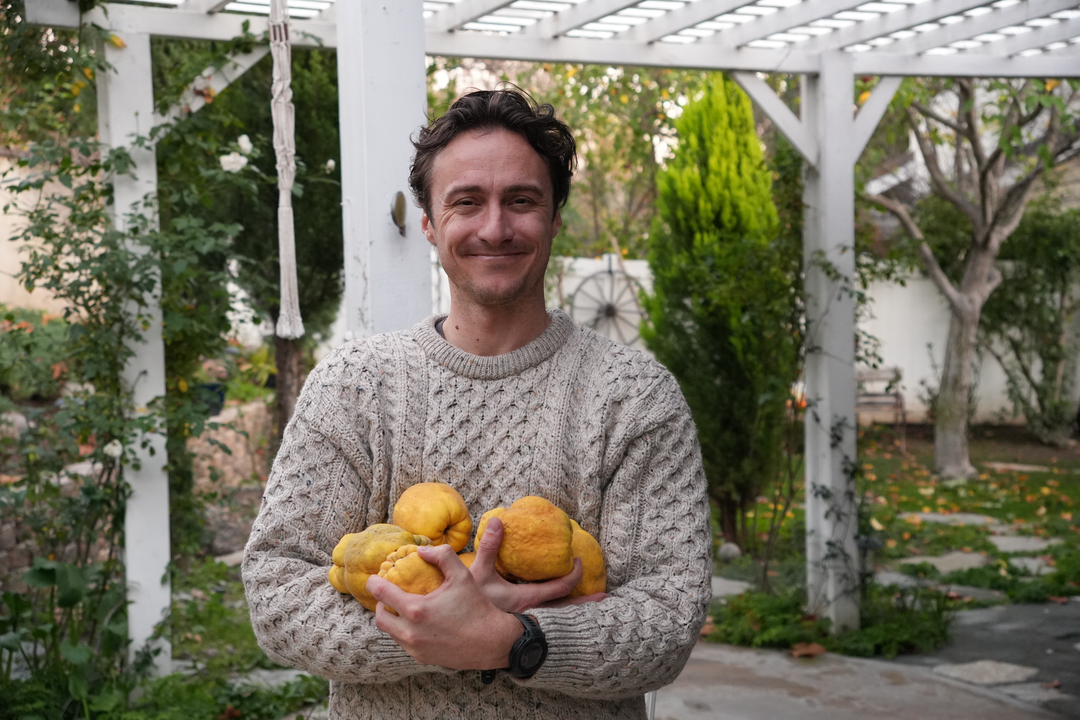
Kristian M. Eschenburg

Kristian M. Eschenburg

Senior Data Platform Engineer

Seattle, WA

About Me

I build the platforms that scientific research and manufacturing run on.

I work at a biologics company, where I own most of the stack: event-driven ingestion from lab instruments, orchestration pipelines, a medallion lakehouse with schema contracts, PostgreSQL backends, and the APIs and dashboards our internal applications sit on. It’s an FDA-regulated environment, which shapes a lot of how it gets built.

I also ship models for antibody design and property prediction, trained with PyTorch DDP on an in-house multi-GPU cluster I help maintain, plus the inference infrastructure that serves them.

Before this I spent seven years on a PhD in biomedical engineering at the University of Washington, working with MRI (structural, functional, diffusion, arterial spin labeling) and building machine learning models on top of it, including graph neural networks for cortical segmentation. Processing and training ran across GPU-backed HPCs.

Outside of work I like backcountry skiing, trail running, travel, practicing new languages, and gardening.

Interests

  • Cloud architectures and distributed systems
  • Applied machine learning for scientific data
  • Backend services, APIs, and databases

Education

  • PhD in Biomedical Engineering, 2021

    University of Washington

  • BSc, 2012

    University of California, Los Angeles

Experience


Just-Evotec Biologics

Apr 2022 – Present Seattle, WA
  1. Senior Data Platform Engineer
    Oct 2025 – Present
    Details
    • Modernized the Dagster orchestration platform on AWS ECS, decoupling pipeline infrastructure from application code for independent deployability and horizontal auto-scaling. Cut pipeline provisioning from hours to under 5 minutes via reusable infrastructure templates covering sensors, schedules, and triggers.
    • Built and maintain a centralized schema registry enforcing versioned, backwards-compatible data contracts across 65+ schemas spanning instrument ingestion, orchestration pipelines, and lakehouse writes. Upstream validation catches quality issues at the point of entry, before bad data reaches downstream models and analytics.
    • Architecting a regulatory-grade audit framework covering data lineage, schema versioning at write time, and user access logging, persisted to immutable DynamoDB stores, designed to enable rapid response to FDA and DoD information requests.
    • Building a unified experiment management platform that consolidates sample planning, assay requests, run tracking, planned-vs-actual reconciliation, and reporting into one surface, replacing 6+ fragmented legacy interfaces. A multi-service monorepo (FastAPI, Next.js/React, shared Pydantic contracts) over multi-schema PostgreSQL, deployed via Terraform.
  2. Senior Data Scientist
    Apr 2022 – Oct 2025
    Details
    • Architected a serverless, event-driven AWS instrument ingestion pipeline (S3, EventBridge, Lambda, ECS) onboarding 7 scientific instruments, reducing time from assay file generation to analytics-ready data from days or weeks to under 30 minutes. Eliminated a data provenance risk where raw assay files previously sat on scientists’ laptops with no version control or traceability.
    • Delivered 3 production ML models for antibody design and property prediction, including fine-tuned masked protein language models and graph neural networks trained on protein structure data. Trained with PyTorch DDP on in-house GPU HPC; deployed as horizontally scalable inference endpoints on ECS Fargate and Lambda, tracked with MLflow.
    • Built and deployed FastAPI data APIs, Dagster orchestration pipelines, and visualization dashboards now used by 60+ scientists across 6 functional groups, replacing manual data-sharing workflows and ad hoc reporting with standardized, always-available data access.
    • Introduced Terraform as the company’s infrastructure-as-code standard, now adopted org-wide across data science, data engineering, and software engineering. Built reusable modules for ECS/Fargate services, CI/CD, and application infrastructure, cutting deployment time from hours to minutes across dev, staging, and production.


Curi Bio

Jun 2021 – Apr 2022 Seattle, WA
  1. Data Scientist
    Jun 2021 – Apr 2022
    Details
    • Developed deep learning models to predict stem cell differentiation outcomes from high-throughput microscopy images, reducing material resource costs by upwards of 25% for the associated research stage.
    • Built contractility waveform analysis pipelines for engineered cardiac and skeletal myocytes, using signal processing to characterize the impact of therapeutics on muscle cell function.


University of Washington, Integrated Brain Imaging Center

Sep 2014 – Sep 2021 Seattle, WA
  1. PhD Graduate Student, Biomedical Engineering
    Sep 2014 – Sep 2021
    Details
    • Developed graph neural networks for human MRI segmentation and biomarker generation, improving accuracy 15%+ over standard CNNs and improving test-retest reliability of patient-specific segmentations by 6% across clinical scanning sessions.
    • Applied dynamic mode decomposition (DMD) to fMRI brain dynamics, outperforming state-of-the-art ICA at identifying canonical activation networks while requiring shorter scanning sessions.
    • Designed a spatial statistical modeling approach for analyzing variability in the topography of functional brain connectivity, with results aligning with long-standing theories of hierarchical brain organization.
    • Built a turn-key orchestration pipeline for processing 1000+ functional and diffusion MRI scans (>1.5TB) on a GPU-backed HPC system.
    • Awarded a highly selective 3-year ARCS Washington Research Foundation fellowship.


Internships

Jun 2016 – Jun 2017 Washington State
  1. Software Engineering Intern, Phase Genomics
    Apr 2017 – Jun 2017
  2. Data Science Intern, Pacific Northwest National Laboratory
    Jun 2016 – Sep 2016

Research

Applied deep learning on brain imaging — the same methods I now apply to protein design.

Learning Cortical Parcellations Using Graph Neural Networks

We examine the utility of graph neural networks for the purpose of learning cortical segmentations. We show that attention-based transformer networks significantly outperform conventional GCN and linear feed-forward variants for the purpose of generating accurate reproducible cortical maps.

Linear Mapping of Cortico-Cortico Resting-State Functional Connectivity

Using non-linear dimensionality reduction of functional brain connectivity patterns, and multivariate spatial statistics to characterize the functional embeddings, we analyze the spatial relationships between pairs of cortical regions to better examine how pairs of cortical regions connect and relate to one another.

Extracting Reproducible Time-Resolved Resting State Networks Using Dynamic Mode Decomposition

In this paper, we develop a novel method based on dynamic mode decomposition (DMD) to extract resting-state networks from short windows of noisy, high-dimensional fMRI data, allowing RSNs from single scans to be resolved robustly at a temporal resolution of seconds. This automated DMD-based method is a powerful tool to characterize spatial and temporal structures of RSNs in individual subjects.

Automated Connectivity-Based Cortical Mapping Using Registration-Constrained Classification

In this analysis, we propose the use of a library of training brains to build a statistical model of the parcellated cortical surface to act as templates for mapping new MRI data.

Registering Cortical Surfaces Based on Whole-Brain Structural Connectivity and Continuous Connectivity Analysis

We present a framework for registering cortical surfaces based on tractography-informed structural connectivity. We define connectivity as a continuous kernel on the product space of the cortex, and develop a method for estimating this kernel from tractography fiber models.

Skills and Technologies

Cloud & Infrastructure

  • Compute: ECS/Fargate, Lambda; Kubernetes (personal projects)
  • Events & storage: EventBridge, S3, DynamoDB
  • Access & observability: IAM, Cognito, CloudWatch
  • Infrastructure as code: Terraform

Data Engineering

  • Orchestration: Dagster
  • Lakehouse: Delta Lake, Parquet
  • Transactional stores: PostgreSQL
  • Governance: schema registries, versioned data contracts

ML & AI

  • Modeling: PyTorch (DDP), DGL, scikit-learn
  • Tracking & registry: MLflow
  • Managed LLMs: Bedrock
  • Applied: protein language models, graph neural networks

Applications & Delivery

  • APIs: FastAPI, Pydantic
  • Frontend: Next.js, React, TypeScript
  • Build & deploy: Docker, GitHub Actions CI/CD
  • Practices: test-driven development, monorepos

Recent Posts

Correlation IDs and Request Lineage Across Services

We are a pretty small team, yet we still have a pretty large and expansive suite of services, dashboards, and backend data systems. When the number of services was small, auditting and logging was …

Service-to-Service Auth with Cognito Scopes

I’m building tools that help scientists run their day-to-day work. I work in a heavily regulated environment, subject to both U.S. and European digital policy requirements. The scenario we face …

Deploying Dagster to AWS ECS, Part 2: Pipelines

Here is the second of two posts on running Dagster in ECS. The first dealt with the platform side: the Daemon, the two Webservers, the ALB and Cognito wiring, the three security groups, the Cloud Map …

Deploying Dagster to AWS ECS, Part 1: The Platform

Here at Just-Evotec Biologics, the Data Platform team uses Dagster as our orchestration platform of choice. Many of our services are deployed to AWS ECS as Fargate or EC2 tasks. Getting Dagster onto …

Building a Schema Registry from Scratch for a Scientific Data Platform

When I joined Just-Evotec Biologics (first as a data scientist, now as a data platform engineer), I inherited a data ecosystem that probably looked pretty familiar to what lots of others have dealth …